Can a bedtime to-do list help you fall asleep faster?
In a sleep-lab study, 57 young adults who wrote a 5-minute to-do list at bedtime fell asleep about 9 minutes sooner than those who listed finished tasks.
By NeuroPulse
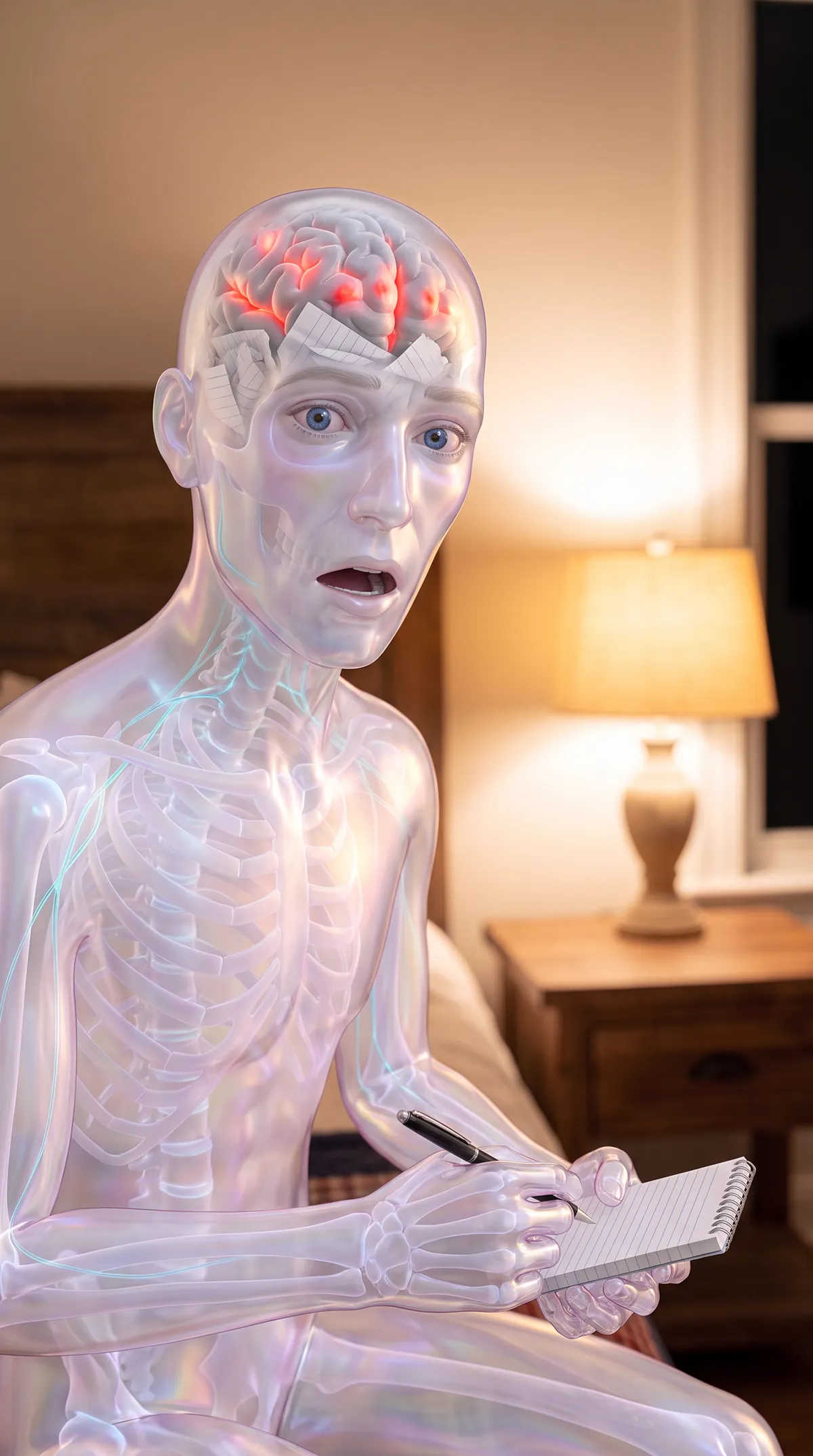
It’s 12:10 a.m. The phone is face down and the lights are off. Then your mind starts reading out tomorrow. Email the landlord. Pick up the dry cleaning. Did you ever answer that message from work?
You’re tired. Your to-do list isn’t.
Why does tomorrow’s list keep you awake?
Tasks you haven’t done yet tend to stay on your mind. In the dark, with nothing else to look at, your brain keeps going over what it’s afraid of forgetting. That rehearsing keeps you alert at the moment you want to drift off.
One likely reason writing helps: once the tasks are on paper, you no longer have to hold them in your head. This is the researchers’ explanation. The study measured sleep, not brain activity, so nobody watched it happen.

What did the to-do list study find?
At Baylor University in Texas, 57 healthy adults aged 18 to 30 spent one night in a sleep lab (Scullin et al., Journal of Experimental Psychology: General, 2018). Shortly before lights out, at about 10:30 p.m., each person wrote for 5 minutes. Half wrote a to-do list for the next few days. The other half wrote about tasks they had already finished.
Sensors measured exactly when each person fell asleep. The to-do list group fell asleep in about 16 minutes, the finished-tasks group in about 25. That is roughly 9 minutes sooner.
The detail mattered too. The more items people put on their to-do list, the faster they tended to fall asleep.
The researchers ran the test on each person’s first night in the lab on purpose. A strange bed, wires and a new room make that night a little stressful, a bit like the night before a big day at work.
What this study can’t tell us
It was one night, in a lab, with young adults who had no sleep problems. Nobody in the study skipped writing altogether, so it can’t say whether a to-do list beats doing nothing. It only shows that writing tomorrow’s tasks beat writing about finished ones. It also didn’t test people with insomnia, or anyone who did this for weeks.
How to write a bedtime to-do list tonight
Keep it small. A pen and a notepad by the bed are enough.
- Set a timer for 5 minutes. That’s how long people wrote in the study.
- Write what’s coming. Everything you need to do in the next few days: the emails, the calls, the errands.
- Be specific. “Email Dana about the invoice before lunch” beats “work stuff”. Longer, more detailed lists went with faster sleep.
- Use paper. A phone pulls you back into messages.
- Close the notebook. The list is done for tonight.

If a new task pops up after the light is off, add one line to the pad and put it back.
Sometimes the list turns into worries: “the presentation could go badly”. Turn each one into a next step you can actually do. “Read the slides for 15 minutes after coffee” is a task. A vague fear isn’t, and it’s harder to put down.
Who should be careful?
Writing a list is a gentle habit. If you lie awake most nights for weeks, or poor sleep is wearing down your days, talk to a doctor. A notebook is not a treatment for insomnia.
Where to go from here
If you read on a screen in bed, see why your e-book may delay sleep. For another small bedtime experiment, read two kiwis before bed.
Curious which simple habit to try first? Take the free 60-second brain quiz.
FAQ
How long should I write my to-do list before bed?
The people in the study wrote for 5 minutes. Use the time to get tomorrow’s tasks out of your head, as specifically as you can.
Should I write what I did today or what I need to do tomorrow?
In this study, the people who wrote about upcoming tasks fell asleep about 9 minutes sooner than those who wrote about finished ones.
Will a bedtime to-do list work for everyone?
Nobody can say yet. It was one night with 57 young, healthy adults, so results may differ for you. It costs nothing to try, and if sleep problems go on for weeks, talk to a doctor.
Educational content, not medical advice.